
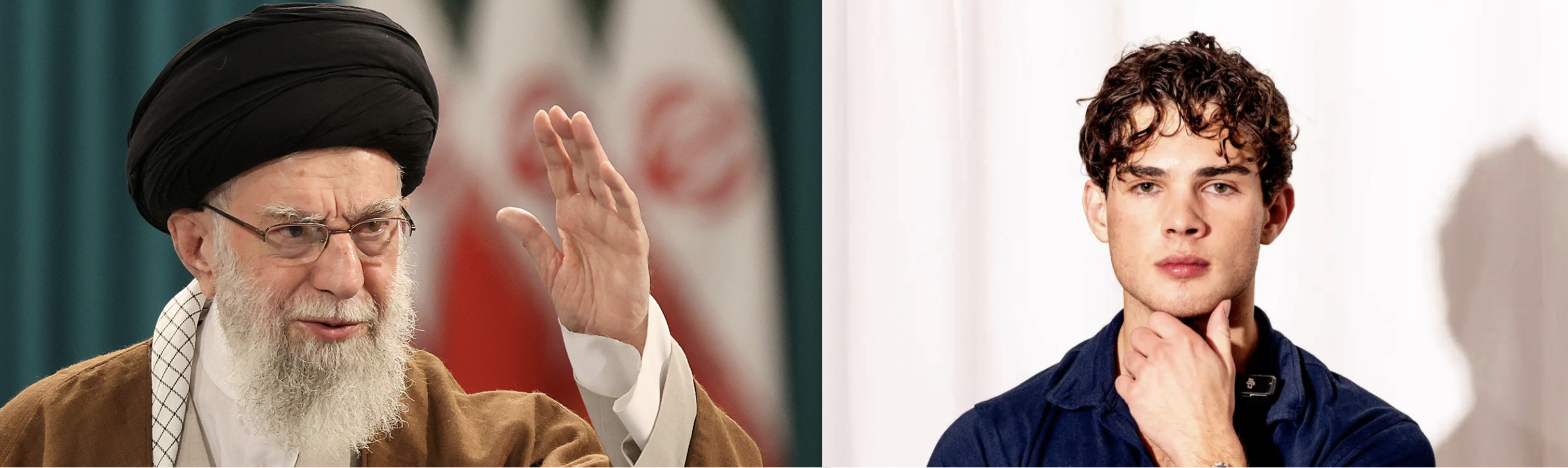
TEHRAN — In the weeks since the death of Grand Ayatollah Morteza Khomeini-Nassiri, associates tasked with managing his private affairs have made a discovery that several have described, in private conversations with this newspaper, as "difficult to reconcile" with his public legacy.
Among the devices recovered from the Supreme Leader's personal quarters was a tablet registered to a pseudonymous account with an extensive viewing history on Kick, the American livestreaming platform. The account's most-watched content, logged over a period of approximately fourteen months, belonged almost entirely to Braden Peters — the American influencer known online as Clavicular.
Four people with direct knowledge of the discovery agreed to speak on condition of anonymity, citing fear of reprisal from the transitional religious authority now administering the Supreme Leader's estate. A fifth source, a senior cleric who had served in an advisory capacity to Khomeini-Nassiri for over a decade, did not deny the account's existence but declined to characterize its contents.
"There are aspects of a man's private life," he said, "that are between him and God."
What the Records Show
The account, created in the autumn of 2024 under a name that translates loosely from Persian as "student of discipline," had watched an estimated 300 hours of Clavicular content by the time of the Supreme Leader's death. Viewing sessions typically began in the late evening, often running past midnight, and were concentrated on Peters' longer livestreams rather than the short clips that circulate more widely on social media.
Sources disagree about the extent to which Khomeini-Nassiri understood what he was watching. Two described him as a genuine if bewildered enthusiast, drawn initially to Peters' emphasis on physical discipline and self-improvement before becoming, in the words of one source, "simply habituated to watching." A third suggested he may have been conducting informal research into Western youth culture. The fourth said he had no idea what the Supreme Leader made of it and was not prepared to speculate.
What is not in dispute is that the viewing was sustained, deliberate, and conducted in private.
A Complex Relationship with the Content
Peters rose to prominence in the mid-2020s through content promoting looksmaxxing — the practice of optimizing physical appearance through increasingly extreme means, including self-administered hormones, facial bone manipulation, and strict dietary regimens. His streams frequently feature long monologues on masculine self-improvement, ratings of other men's physical attributes, and, more recently, appearances alongside figures from the American far-right.
It is this latter element, sources suggest, that may have given Khomeini-Nassiri some degree of ideological permission to engage with the content. Peters has appeared alongside figures publicly critical of American institutions, and several of his more political statements — including his description of Vice President JD Vance as "subhuman" — were reportedly noted with approval by the Supreme Leader, who had no interest in looksmaxxing per se but shared a dim view of Vance.
"He would have found common ground where he could," one source said.
The broader content — the peptide recommendations, the bone smashing, the steroid disclosures — appears to have been received with a mixture of confusion and fascination rather than disapproval. One source recalled the Supreme Leader remarking, during what he believed to be a private conversation, that Peters reminded him of "a young man who is trying very hard," which those present took as neither a compliment nor a criticism.